

Helping Children Cope During Hurricane Recovery
Helping Keiki Cope During Hurricane Recovery—and Prepare for the Next Storm
The skies may clear, but that does not mean the stress of a hurricane disappears—especially for children.
Families across Hawaiʻi Island are still dealing with power and water disruptions, property damage, cleanup, interrupted routines and uncertainty. Now, with more storm activity approaching, some keiki may be worried that it will happen all over again.
Children do not always have the words to say, “I’m scared” or “I don’t feel safe.” Stress may instead show up as trouble sleeping, changes in appetite, difficulty concentrating, clinginess, irritability, emotional outbursts or physical complaints.
Save the Children has developed practical guidance to help parents, grandparents, teachers and other caregivers support children during and after disasters.
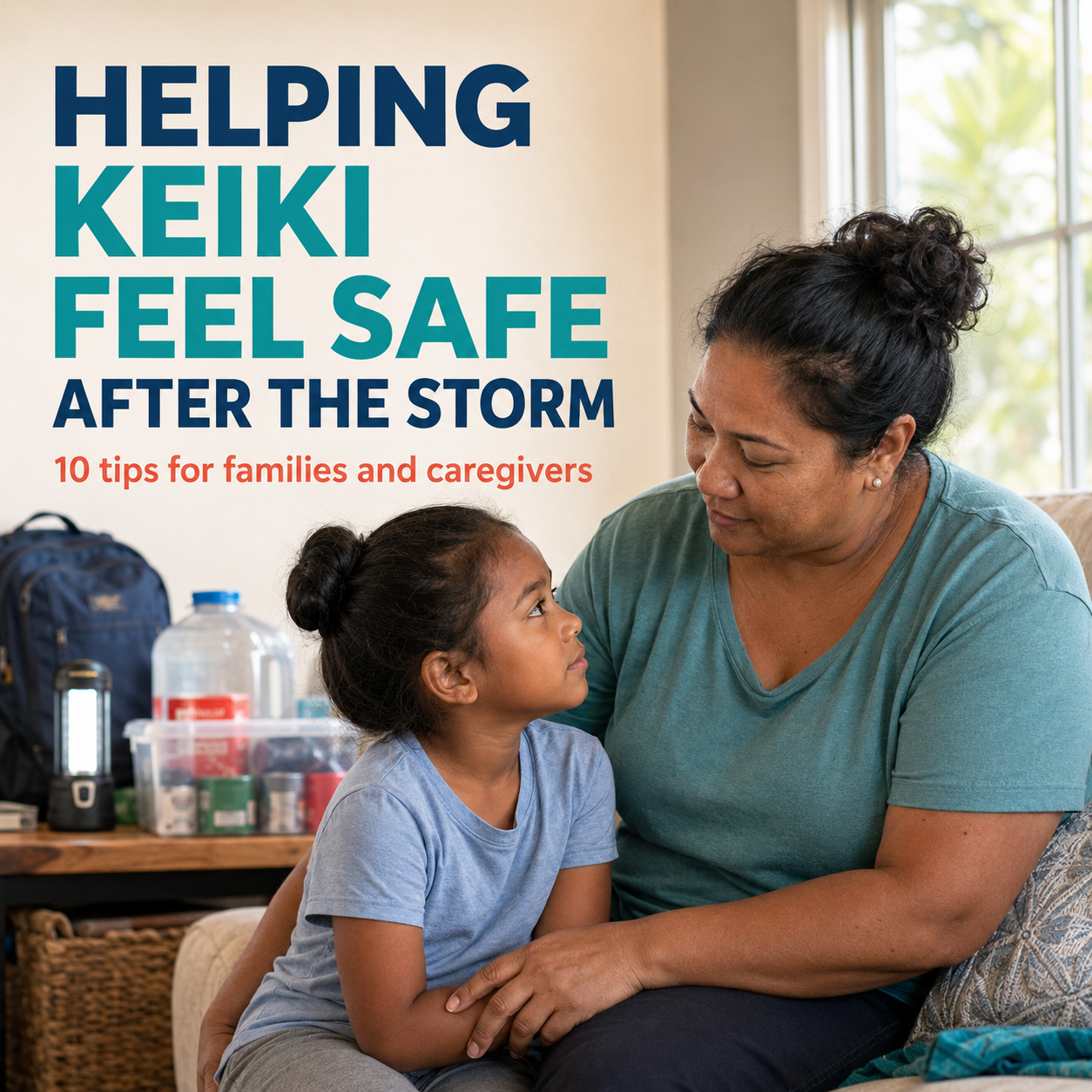
10 Ways to Help Keiki Feel Safer
11. Limit repeated storm coverage
Adults need current information, but children do not need to see frightening images or hear the same warnings repeatedly. Keep them informed in simple, age-appropriate ways without leaving emergency coverage playing in the background all day.
2. Ask what they know
Children may hear information from friends, social media or adult conversations and misunderstand what it means. Ask what they have heard and what they think is happening before trying to reassure them.
A simple question such as, “What are you wondering or worried about?” can help begin the conversation.
3. Reassure them with honest, concrete information
Avoid making promises you cannot guarantee, such as saying another storm will not come. Instead, explain what the adults around them are doing to keep them safe.
You might say:
“We are watching the weather. We have our supplies ready, and we know what we will do if conditions change. Keeping you safe is our most important job.”
4. Watch for changes in behavior
After a frightening or disruptive event, children may temporarily experience changes in sleep, eating, concentration or emotions. Give them patience and support.
If significant changes continue or interfere with daily life, consider talking with the child’s healthcare provider, teacher, school counselor or another qualified professional.
5. Remember that every child responds differently
One child may want to talk about the storm repeatedly. Another may become quiet. Younger children may need more physical reassurance, while older children may seek information online or try to hide their concerns.
There is no single “correct” response. Meet each child where they are.
6. Offer extra time and attention
Small moments of connection can help restore a child’s sense of safety. Talk, listen, read together, play a game or spend a few quiet minutes together without phones or television.
You do not need to have all the answers. Being present matters.
7. Model calm preparation
Children watch how adults respond. It is okay to acknowledge that you are concerned, but try to pair that honesty with calm action.
For example:
“I am concerned about the weather, so I’m checking our supplies and following official updates. We have a plan.”
Prepared does not have to mean panicked.
8. Be mindful of adult conversations
Many adults are understandably frustrated and exhausted during recovery. Try to avoid discussing worst-case scenarios, financial worries or frightening rumors where young children can hear them without context.
Children often understand more than adults realize—but not always enough to interpret those conversations accurately.
9. Restore familiar routines where possible
Regular meals, bedtime routines, school or child care, play and time with familiar people can help children regain a sense of stability.
During an outage or evacuation, routines may need to look different. Even one familiar ritual—a bedtime story, evening check-in or favorite song—can provide comfort.
10. Give children a safe way to help
Age-appropriate helping can replace some of the helplessness children may feel. Keiki might pack their comfort items, help check the family supply list, make thank-you cards for emergency crews, gather donations or help prepare something for a neighbor.
Keep activities safe, voluntary and appropriate for the child’s age.
Prepare a Simple Keiki Safety Plan
Before the next round of severe weather, take a few minutes to explain:
Where the family will shelter
Who will pick them up if school or child care closes
What will happen if electricity or internet service goes out
Which trusted adults they can go to for help
What comfort item they may bring
How the family will stay connected if separated
Children do not need every frightening possibility explained to them. They need to know that the adults around them have a plan.
A Reminder for Caregivers
Parents and caregivers are recovering too. You may be tired, worried about money, cleaning up damage, managing outages or trying to keep up with changing information.
You do not have to handle every moment perfectly. What helps children most is a caring adult who listens, offers reassurance and creates as much stability as circumstances allow.
For the complete expert guidance, visit Save the Children’s 10 Expert Tips for Helping Children Cope with Disasters.
You can also download Save the Children’s printable guide for parents and caregivers to keep with your family emergency supplies or share with teachers, child care providers and relatives.
As Hawaiʻi Island continues recovering and prepares for whatever may come next, remember: keiki are listening, watching and taking their cues from the adults they trust. Calm information, familiar routines and a little extra attention can make a meaningful difference.